Blending Brush
| Technique | Makeup application |
|---|---|
| Original use | Seamlessly blending liquid or cream products on the skin |
| First created | Late 20th century (circa 1990s) |
| Typical material | Synthetic fibers (e.g., nylon, taklon) |
| Shape | Short, densely packed bristles with a rounded or domed tip |
| Firmness | Typically soft to medium |
| Works with | Liquid foundation, cream blush, concealer, contour products |
| Key function | Eliminates streaks and harsh lines for a diffused finish |
Origin and history
The blending brush is a foundational tool in professional makeup artistry with origins in the mid-20th century. Its development is closely tied to the film and television industries in the United States and Europe, where the need for seamless, camera-ready makeup became paramount. Before its widespread adoption, makeup was often applied with denser, less precise tools that could leave harsh lines. The refinement of the blending brush is attributed to the professional makeup kits of the 1960s and 1970s, which began to include more specialized brush shapes. Its evolution continued through the late 20th century with advances in synthetic fiber technology, allowing for more affordable and versatile options. Today, it is considered an essential, basic tool whose form has been standardized across countless brands and makeup lines globally.
What it is for
A blending brush is designed primarily to soften, diffuse, and merge color products on the skin, eliminating harsh edges and creating gradual transitions. Its core function is to apply and manipulate powder products like eyeshadow and blush, though it can also be used with cream formulations. The brush is essential for creating gradient effects, such as a smoky eye, where multiple shades must appear to melt into one another without visible boundaries. It is used to apply color to the crease of the eyelid to add dimension and depth through seamless shading. On the cheeks, a blending brush can soften the perimeter of blush or bronzer to achieve a natural, flushed appearance rather than a stamped-on circle of color. The tool is also frequently employed in a corrective capacity to tone down or soften any makeup application that appears too heavy or sharply defined.
Pros and cons
The primary advantage of a blending brush is its ability to create professional, polished results that are difficult to achieve with fingers or denser brushes, elevating the overall finish of makeup. A high-quality blending brush made with appropriate fibers can apply product with a light, controlled touch, allowing for gradual build-up of color and preventing over-application. However, a significant con is that poor-quality brushes with scratchy, loosely packed, or poorly shaped fibers can fail to blend effectively, instead stirring up product or disrupting the base makeup underneath. Users often regret choosing brushes that are too large or too small for their specific eye shape or intended area, leading to imprecise application and muddy color distribution. A common mistake is over-blending, where the user works the brush in circular motions for too long, which can cause eyeshadow colors to become muddy and lose their individual intensity. Furthermore, synthetic brushes designed for creams may not perform well with powders, and natural hair brushes meant for powders can be damaged by creams, highlighting the need for proper tool selection.
Who it suits
The blending brush suits virtually anyone applying makeup, from absolute beginners to seasoned professional artists, due to its fundamental role in achieving a blended look. It is particularly suited to individuals aiming for soft, natural, or gradient-based makeup styles where harsh lines are undesirable. Those with deeper skin tones who are working with richer or more contrasting eyeshadow shades benefit greatly from a blending brush to ensure smooth transitions that enhance rather than mask the skin's natural depth. Individuals with hooded or monolid eye shapes find it indispensable for placing and diffusing color visibly above the natural crease. However, the specific size, shape, and fiber type of the brush must be matched to the user's technique, preferred product formulas, and facial anatomy for optimal results. Ultimately, anyone seeking to improve the technical finish and artistry of their makeup application will require at least one well-chosen blending brush in their toolkit.
Latest Blending Brush news
Latest reporting
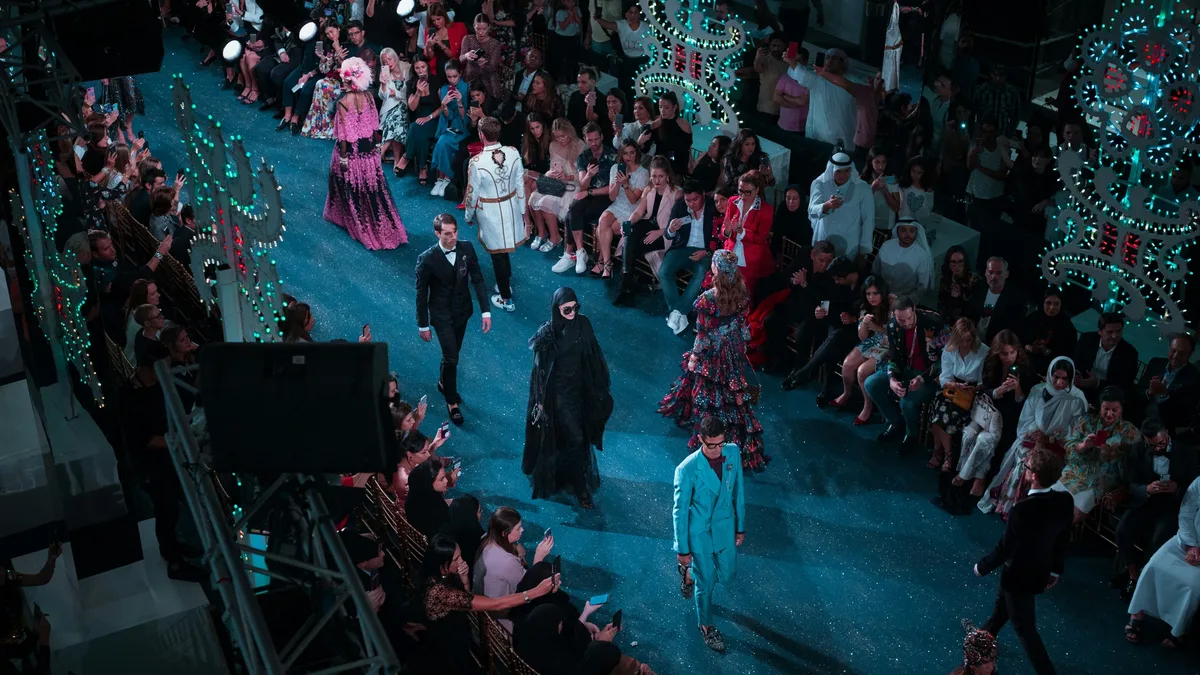
Dior SS27 Show Features Wénwán Walnut Invitations
Jonathan Anderson sent polished wénwán walnuts as invitations for Dior's SS27 show, blending Chinese cultural tradition with luxury fashion.

Turnstile's Never Enough: Versions Remix
The band Turnstile released a 22-track remix album titled Never Enough: Versions on August 28, 2026. The album features artists from Elton John to...
Madhappy and KEEN Reimagine the Mary Jane for Outdoor Style
Madhappy and KEEN collaborate on a gorpcore-inspired Mary Jane shoe, blending archival KEEN design with Madhappy's playful outdoor aesthetic in two...
ECHT's Nova Trek Range Blends Outdoor Functionality with Fashionable Style
Australian activewear label ECHT launches its new gorpcore-inspired line, Nova Trek, blending functional outdoor gear with sleek streetwear.
Lacoste Unveils the Slam Break Sneaker for the US Open
Lacoste has released a new sneaker, the Slam Break, blending retro tennis style with modern streetwear. The shoe comes in two versions: a leather and...
FARM Rio and Rip Curl Unite for Vibrant Surf Culture Collection
The Brazilian and Australian brands collaborate on a second collection blending technical expertise with a signature print-heavy aesthetic.