Sharp Liner
| Country of origin | United States |
|---|---|
| First created | 1990s |
| Original use | Permanent cosmetic enhancement |
| Technique | Manual pigment implantation |
| Shade system | Color formulated for individual skin undertone |
| Application area | Primarily eyelids and lips |
| Result longevity | Long-term to permanent |
Origin and history
Sharp Liner is a cosmetic application technique that originated in East Asia, with its principles being formally documented and popularized in South Korea in the early 2010s. The method evolved from traditional eyeliner application but was refined specifically to address the common challenges faced by individuals with monolids or hooded eyelids. Its development coincided with the global rise of K-beauty, which emphasized precise, natural-looking makeup tailored to individual facial structures. Makeup artists and beauty enthusiasts in the region developed and shared the technique through video tutorials and beauty forums, establishing its core principles. The approach is not tied to a single product launch but rather to a specific methodological shift in cosmetic application. Its history is therefore one of technique dissemination rather than corporate invention, becoming a staple in makeup artistry for specific eye shapes.
What it is for
The Sharp Liner technique is designed to create a crisp, thin, and sharply defined eyeliner look that remains visible on monolids, hooded eyelids, or eyes with little visible lid space. Its primary purpose is to counteract the tendency of traditional thicker eyeliner lines to disappear or transfer when the eye is open due to the skin fold. This is achieved by focusing the pigment in a very precise area along the lash line, often following the natural eye shape without extending the wing upwards prematurely. The technique is for those seeking a defined, polished eye look that enhances the eye shape without overwhelming it or altering its apparent structure dramatically. It serves a functional goal of longevity and visibility as much as an aesthetic one of clean definition. Consequently, it is a solution-oriented approach to eyeliner application rather than merely a stylistic choice.
What is the best Sharp Liner
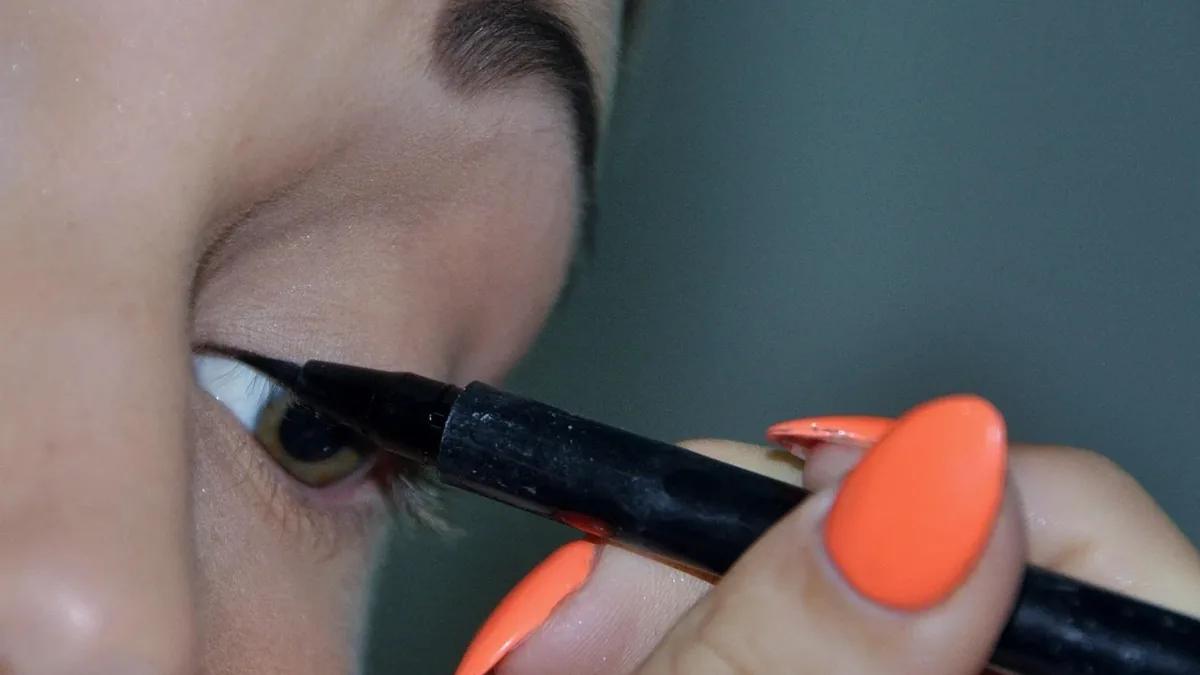
The best tool for the Sharp Liner technique is widely considered to be a fine-tip, highly pigmented liquid eyeliner pen with a firm, brush-like applicator. These pens provide the control necessary to deposit a thin, opaque line in a single pass, which is crucial for the precision the technique demands. Felt-tip liners are often favored for their ability to deliver a consistent flow of product without skipping on the delicate eyelid skin. The product must have a quick-drying, smudge-proof formula to prevent transfer onto the upper lid once the eye is opened. While specific brand preferences exist among users, the defining characteristics of the best tool remain a combination of a precise tip, intense pigment, and a long-wearing, transfer-resistant formula. Gel liners applied with an extremely fine, angled brush can also achieve the effect but generally require a higher degree of skill and a steady hand compared to a pen format.
Overview
Sharp Liner is a methodological framework for eyeliner application defined by its outcome: a line that is razor-thin, sharply defined, and tailored to the individual's eye anatomy. The technique involves mapping the line according to the natural lash line and the fold of the eyelid, often requiring the user to apply the liner while looking straight ahead into a mirror. It typically avoids thick, graphic shapes in favor of a line that may subtly thicken only at the outermost corner of the eye. The overview of the process includes skin preparation, strategic line placement, and the use of specific tools to execute the fine line. It is distinct from other liner styles, such as puppy liner or dramatic winged liner, in its minimalist approach and its primary functional goal. Mastery of the technique involves understanding one's own eye shape and practicing the required hand steadiness.
What to know
It is essential to know that successful Sharp Liner application requires the eyelid to be primed and set with powder to create a smooth, non-oily base that prevents the liner from bleeding. The angle of the wing is not automatically lifted; instead, it often follows the lower lash line's natural trajectory or is drawn almost horizontally to maintain visibility when the eye is open. Practitioners should know that the line is usually drawn in short, connected strokes rather than in one continuous pull, allowing for greater control and correction. Understanding the concept of "tightlining" or applying liner between the lashes is often a complementary step to enhance the effect without adding visible thickness. It is also important to know that the technique has a significant learning curve and demands patience, as initial attempts may result in uneven lines or require multiple corrections. The final look is often best appreciated with the eyes open and looking forward, which is the true test of its effectiveness.
Common questions
A common question is whether Sharp Liner can be achieved with pencil or gel eyeliner, to which the answer is that it is significantly more difficult due to the challenge of achieving a consistently thin and sharp point with those formulations. Users frequently ask how to prevent the liner from transferring onto the upper eyelid, which is addressed by ensuring the formula is completely dry before opening the eye fully and using a setting powder. Many inquire if the technique is suitable for deep-set or round eye shapes, and it is generally adaptable but requires slight modifications in the wing angle and line thickness to flatter those structures. People often question how to correct mistakes, and the recommended method is to use a pointed cotton swab dipped in micellar water or concealer for precise clean-up. Another frequent query concerns the durability of the look, which relies heavily on using a waterproof or long-wearing product formula specifically designed for oily eyelids. Beginners commonly ask how to steady their hand, and recommendations include resting the elbow on a stable surface and gently pulling the skin taut at the temple during application.
Pros and cons
A significant pro of the Sharp Liner technique is its ability to create a clean, defined eye look that stays visible on challenging eye shapes where other methods fail. It results in a polished, intentional appearance that can look professional and is highly regarded in beauty communities that favor precise makeup. The technique, once mastered, can be quicker than attempting to build and correct a thicker, less precise line. A primary con is the steep learning curve and the frustration that leads many beginners to abandon the technique before achieving proficiency. The required ultra-fine tip liners often dry out faster than standard liners and can be more expensive, representing a recurring cost. A common mistake is applying too much pressure, which can fray the tip of the liner pen, cause product to flood, and ruin the fine line, leading to wasted product and user regret. Those with unsteady hands or time constraints in the morning often find the technique impractical and frustrating.
Who it suits
The Sharp Liner technique best suits individuals with monolids, hooded eyelids, or eyes with a prominent epicanthic fold who have struggled with eyeliner transfer and invisibility. It is ideal for makeup wearers who prefer a natural, defined look over a bold, dramatic one and value precision in their cosmetic application. This method suits those who have the patience to practice a technical skill and who do not mind investing time in their daily makeup routine. It is also well-suited to people with oily eyelids who require a long-wearing, transfer-proof solution, assuming they use the correct product formulas. The technique is less suited to individuals who prefer a soft, smudged eyeliner look or those who have very little time for makeup application in the morning. It is generally not recommended for beginners without prior eyeliner experience, as the specific challenges can be discouraging.