Hanfu Inspired
| Country of origin | China |
|---|---|
| First created | 4th century BCE (Zhou dynasty) |
| Original use | Traditional ceremonial and daily wear |
| Technique | Flat pattern cutting and draping |
| Shade system | Based on traditional Chinese color theory (e.g., Five Elements) |
| Silhouette | Cross-collar, wide sleeves, flowing robes |
| Garment layers | Multiple, from undergarments to outer robes |
| Closure | Typically uses fabric ties, not buttons |
Origin and history
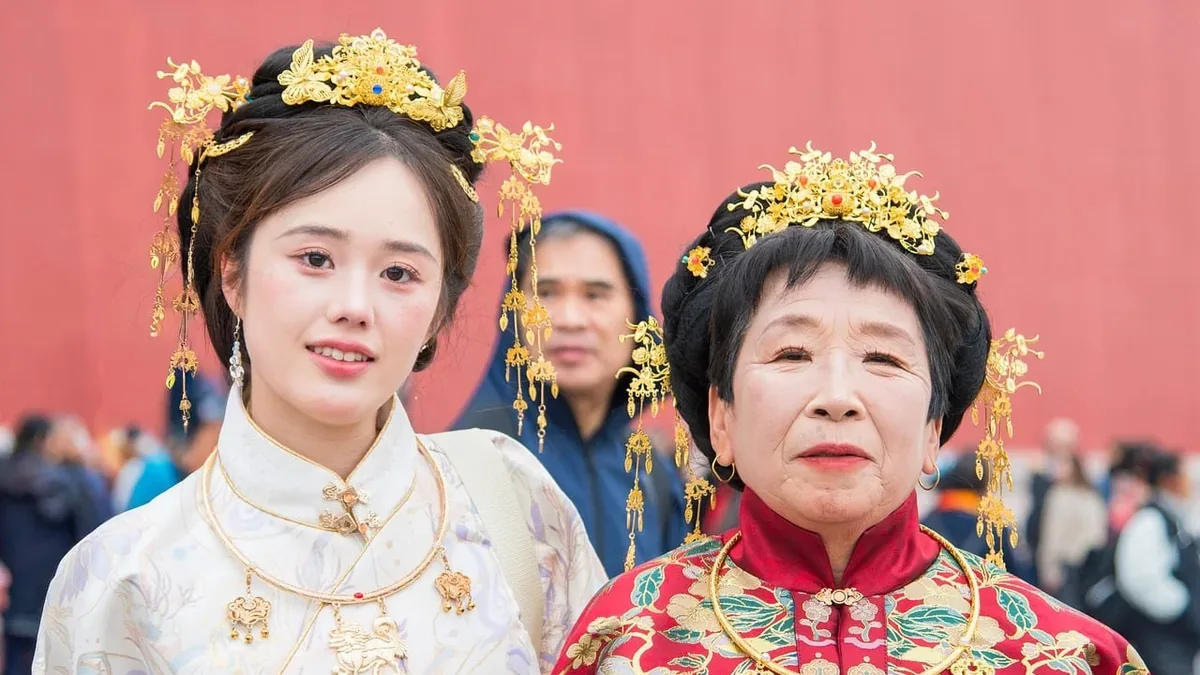
Hanfu Inspired design originates from China, drawing directly from the historical clothing system of the Han ethnic group known as Hanfu. The modern revival and adaptation of these styles into contemporary fashion began in the early 21st century, gaining significant momentum around the 2010s. This movement emerged from a broader cultural renaissance within China, where interest in traditional aesthetics and craftsmanship saw a substantial resurgence. The designs are not replicas but are inspired by silhouettes, motifs, and construction techniques documented across several dynasties, including the Han, Tang, Song, and Ming. The historical Hanfu itself has a lineage spanning millennia, with its basic forms established over two thousand years ago. The inspired contemporary category deliberately separates itself from strict historical reenactment to allow for modern wearability and creative interpretation.
What it is for
Hanfu Inspired clothing serves to integrate traditional Chinese aesthetic principles into modern daily and special-occasion wear. Its primary function is to allow wearers to engage with cultural heritage in a practical, accessible manner without the commitment to full historical accuracy. The designs often simplify complex layers and fastenings found in period-accurate Hanfu to suit contemporary lifestyles and faster dressing. It is used for cultural events, photography, casual wear, and as a form of personal artistic expression that references a specific visual history. The category also functions to make the distinctive silhouettes, such as the cross-collar and wide sleeves, recognizable elements in the global fashion landscape. Furthermore, it provides a bridge for those interested in the elegance of the styles but who require garments made with modern textiles and production methods for durability and care.
What is the best Hanfu Inspired
The best Hanfu Inspired garments prioritize a harmonious balance between authentic inspiration and modern construction quality. Superior pieces accurately translate key design elements, like the right-hand over left-hand collar closure, the presence of a middle seam, and the use of appropriate flat cutting, while utilizing durable fabrics. The best examples feature meticulous finishing, with secure stitching on hems and seams that can withstand movement, as the wide sleeves and flowing skirts involve significant stress. Excellent design also considers color fastness and the quality of any digital or woven patterns, ensuring motifs are culturally respectful and well-executed. Garments from reputable artisans or brands often excel in using natural fiber blends that drape correctly and offer better breathability compared to purely synthetic alternatives. Ultimately, the best item is one where the design inspiration is clear and intentional, yet the garment feels cohesive and robust as a piece of modern clothing.
Overview
Hanfu Inspired fashion constitutes a broad category of apparel that adapts historical Chinese clothing elements for contemporary use. It encompasses a wide range of items, from daily-wear tops and skirts to more elaborate robes and outerwear, all filtered through a modern design lens. The technique central to its construction often involves flat patterning, creating garments with large, straight pieces of fabric that form a loose, flowing silhouette around the body. A defining visual feature is the use of specific components like the cross-collar, wide sleeves (such as *datixiu*), and wrap-style skirts (*qun*), though these may be modified. The shade system relevant to its wearability involves selecting colors and fabric patterns that complement the wearer's skin tone, which is a deliberate consideration in modern styling. This overview positions it as a living, evolving style rather than a static historical costume, with its own rules for coordination and accessorizing.
What to know
Understanding that Hanfu Inspired is a modern adaptation, not historical Hanfu, is crucial to setting accurate expectations for construction and detail. Knowledge of basic terminology, such as the names for common parts like *ru* (top), *qun* (skirt), and *ao* (jacket), aids in identifying and selecting pieces. It is important to know that sizing often follows modern ready-to-wear conventions but may still run large to achieve the intended flowing fit, so consulting specific size charts is necessary. The technique of flat cutting means garments can appear very large when laid flat, as they are designed to drape on the body rather than cling to it. Regarding the shade system, it operates on the principle that the large areas of color presented by the garments can significantly impact complexion, making intentional color choice key. Finally, one should know that care instructions vary widely based on fabric, but many decorated or delicate pieces require hand washing or gentle cycles to preserve embroidery and dyes.
Common questions
A common question is whether Hanfu Inspired clothing can be worn daily, to which the answer is that simplified designs with sturdier fabrics are made specifically for that purpose. People frequently ask how to distinguish Hanfu Inspired from traditional Hanfu, with the key difference being the former's use of modern closures, fabrics, and simplified construction for practicality. Many inquire about appropriate occasions for wearing these styles, which range from casual outings and cultural festivals to themed photoshoots and formal events, depending on the formality of the piece. Questions often arise about sizing, particularly how to achieve a proper fit with such loose garments, where the guidance is to focus on shoulder and length measurements rather than waist or bust. Another frequent query concerns styling, specifically how to integrate these distinct pieces with modern wardrobes, often through layering with plain contemporary basics. Finally, individuals ask about cultural appropriation, leading to discussions on respectful engagement, understanding the inspiration's origins, and supporting knowledgeable creators.
Pros and cons
A significant pro is the unique aesthetic that offers an alternative to mainstream Western fashion silhouettes, providing a sense of cultural connection and individuality. The loose, flowing construction of most pieces also offers superior comfort and ease of movement compared to many form-fitting modern garments. On the negative side, a common con is the impracticality for very active daily tasks; wide sleeves can interfere with activities like cooking or typing, and long skirts may be a tripping hazard. Many who regret their purchase often made the mistake of choosing a piece based solely on appearance without considering fabric quality, ending up with garments that pill, fade, or tear quickly. The styling requirement presents a challenge, as improperly coordinated pieces can look costumey or disjointed rather than elegantly integrated, which is a frequent point of frustration for newcomers. Furthermore, the care for higher-quality pieces with embroidery or delicate dyes can be labor-intensive, requiring hand washing and air drying, which some find inconvenient.
Who it suits
Hanfu Inspired styles suit individuals interested in fashion as a form of cultural appreciation and those seeking distinctive, non-conformist silhouettes in their wardrobe. It particularly appeals to people who prioritize comfort in clothing, as the loose fits and often natural fibers accommodate a wide range of body types and sensitivities. Those with a personal or academic interest in Chinese history and aesthetics find it a rewarding medium for expression, even at an inspired level. The style suits patient wearers who do not mind the adjustment period required to manage longer hems and wider sleeves in everyday environments. It is less suited for individuals seeking minimalist, low-maintenance, or highly tailored clothing, as the style demands more attention to coordination and garment care. Ultimately, it best suits those who approach it as a conscious style choice with an understanding of its design origins, rather than a transient costume trend.
Latest Hanfu Inspired news
Latest reporting
Hometown Road Trip with Three ‘Brutal’ Tattoo Artists
Tattoo artists Jonah Slater, Ronan Mal and James Goh travel together through London, Dublin and Glasgow in a photo series called Markings, revisiting...
The Sims 4 Brings Iconic Teen Movies to Life with New Capsule Kits
Get ready to relive the nostalgia of the 90s and Y2K era with The Sims 4's new Create-a-Sim drops, inspired by Mean Girls and Clueless.
Madhappy and KEEN Reimagine the Mary Jane for Outdoor Style
Madhappy and KEEN collaborate on a gorpcore-inspired Mary Jane shoe, blending archival KEEN design with Madhappy's playful outdoor aesthetic in two...
ECHT's Nova Trek Range Blends Outdoor Functionality with Fashionable Style
Australian activewear label ECHT launches its new gorpcore-inspired line, Nova Trek, blending functional outdoor gear with sleek streetwear.
KATSEYE Enters WILD Era with New Music Video for 'Hootie Frutti'
The girl group throws an underground Brazilian-inspired party in the colorful visual for their latest single, released alongside their latest EP.
TwoJeys and Peggy Gou Unveil Summer-Inspired Collab
The Barcelona-born label teams up with Peggy Gou's lifestyle brand Peggy Goods on a capsule collection inspired by electronic music and Mediterranean...