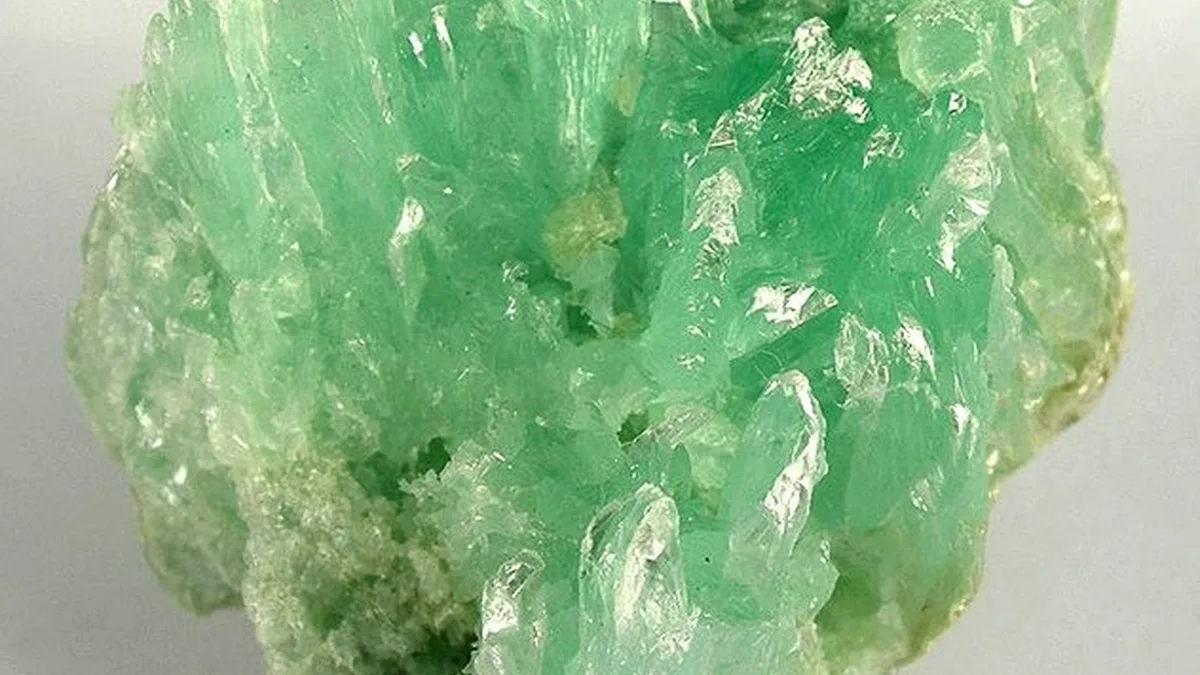
Talc
| Chemical formula | Mg₃Si₄O₁₀(OH)₂ |
|---|---|
| Mohs hardness | 1 |
| Luster | Pearly to greasy |
| Color | White, gray, green, or colorless |
| Cleavage | Perfect in one direction |
| Original use | As a lubricant and carving material |
| Occurrence | Metamorphic rocks |
Origin and history
Talc is a naturally occurring mineral that originates from metamorphic rocks, primarily mined in countries like China, the United States, India, and France. Its use by humans dates back to antiquity, with evidence of its application found in ancient Egyptian artifacts from several millennia ago. In these early periods, talc was ground into powder and used for cosmetic purposes and carving small ornamental objects. The modern commercial mining and processing of talc began to develop significantly during the 19th century alongside industrialization. This era saw its incorporation into a wider range of industrial applications beyond personal use. Its adoption in cosmetic powders became widespread in the late 19th and early 20th centuries as commercial personal care products proliferated.
What it is for
In cosmetic formulations, talc primarily functions as an absorbent powder and texture modifier. It is used to reduce shine on the skin by absorbing excess moisture and sebum, providing a matte finish. The mineral also improves the slip and blendability of products, allowing for smoother application of pigmented items like eyeshadows and blushes. In pressed powder products, talc acts a key bulking agent and helps bind pigments together into a solid compact. Its ability to diffuse light softly can contribute to a blurred, smoothing effect on the skin's surface, minimizing the appearance of fine lines and pores. Furthermore, talc serves as a diluent for intense colorants, enabling the creation of a wide spectrum of shades and tints in cosmetic palettes.
Pros and cons
A primary advantage of talc is its exceptional ability to create a silky, smooth texture that is difficult to replicate with many alternative ingredients. It provides effective oil control and a matte finish that is desirable in products like setting powders and foundations. However, a significant con is the potential for contamination with asbestos, a known carcinogen, due to the two minerals' geological proximity, though cosmetic-grade talc is rigorously purified and tested. Some users with dry skin types find that talc-based powders can emphasize flakiness or feel overly drying on the skin. A common mistake is applying too much talc-based powder, which can lead to a heavy, chalky, or mask-like appearance, especially if not properly blended. Individuals with very deep skin tones may sometimes find that pure white talc bases can leave a visible ashy or gray cast if the final product shade is not carefully formulated with sufficient pigment.
Who it suits
Talc-based cosmetics are generally best suited for individuals with normal to oily skin types who seek oil control and a matte finish. They are a conventional choice for those who do not have sensitivities to mineral-based powders and prefer the classic feel of silky cosmetic textures. The ingredient often works well in setting powders for users who need to lock in foundation and reduce mid-day shine without adding weight. However, people with very dry, sensitive, or eczema-prone skin may find talc exacerbates dryness or causes irritation. Individuals who prioritize strictly asbestos-free or natural cosmetics might avoid talc due to historical contamination concerns, despite modern purification standards. Furthermore, those with deeper skin tones should seek talc-based products that are specifically formulated with enough depth and pigment to avoid the aforementioned ashy cast, relying on the shade system to counteract the base.