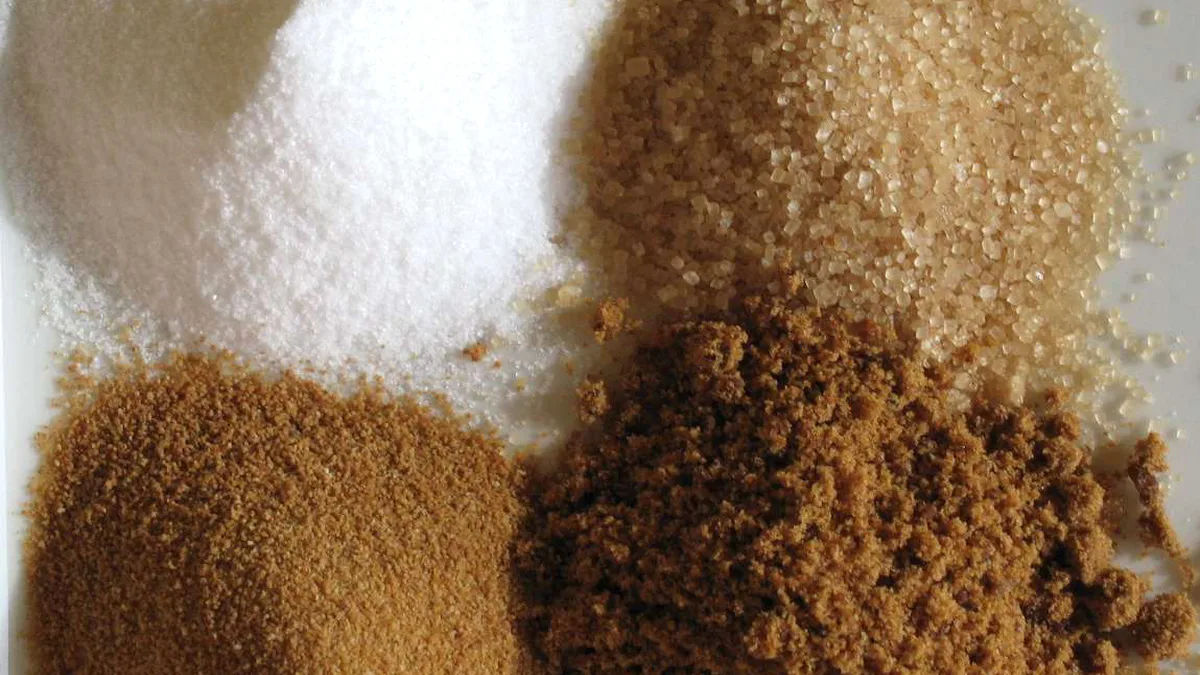
Sugar
| Country of origin | India |
|---|---|
| First created | Late 1990s |
| Original use | Long-wear, transfer-resistant lip color |
| Technique | Matte finish with a blurring effect |
| Shade system | Designed for medium to deep skin tones |
| Key formulation | High-pigment, creamy matte texture |
| Typical product form | Lip crayon or bullet lipstick |
Origin and history
Sugar, in its common culinary form, is derived primarily from two plants: sugarcane and sugar beet. Sugarcane is a tropical grass whose origin is traced to the South Pacific and Southeast Asia, with its cultivation for chewing and primitive extraction dating back thousands of years. The process of crystallizing sugar from sugarcane juice was developed in the Indian subcontinent, with the earliest documented evidence emerging around the 5th century AD. This knowledge spread via trade routes to Persia and the Islamic world, reaching the Mediterranean by the medieval period. The large-scale plantation system for sugarcane, driven by colonial powers, expanded dramatically in the Americas and Caribbean from the 16th century onward. Sugar beet, developed as a temperate-climate source, was selectively bred for high sucrose content in the 18th century, with industrial extraction becoming commercially viable in the early 19th century.
What it is for
Sugar serves as a fundamental carbohydrate, providing a rapid source of metabolic energy. Its primary culinary function is as a sweetener, used to balance acidity and enhance flavor in beverages, baked goods, and processed foods. In baking, sugar contributes to texture and tenderness by interfering with gluten development and it promotes browning through caramelization and Maillard reactions. It acts as a preservative in jams, jellies, and certain cured foods by binding water and inhibiting microbial growth. Sugar also provides bulk and structure to confections like candy and ice cream, and it is crucial for fermentation in processes like brewing and bread leavening. Beyond food, sugar has historical and minor contemporary uses in certain medicinal syrups and in the chemical industry as a feedstock.
Pros and cons
A primary advantage of sugar is its unparalleled ability to deliver pure sweetness and perform specific, reliable technical functions in food science that alternatives often struggle to replicate. It is a globally available, shelf-stable commodity with a long history of use, making it a familiar ingredient for both home and industrial cooking. A significant con is its high caloric density with minimal essential nutrients, leading to its classification as a source of "empty calories" that can contribute to weight gain and metabolic issues when consumed in excess. Many individuals regret its pervasive inclusion in processed foods and beverages, where it is added in large quantities without clear culinary need, making avoidance difficult. A common mistake is underestimating the cumulative intake from sauces, breads, and drinks, not just from obvious desserts. Furthermore, its intense sweetness can dull the palate over time, reducing the appreciation for naturally sweet flavors found in fruits and vegetables.
Who it suits
Sugar suits applications where specific physicochemical properties are non-negotiable, such as in professional pastry work, candy making, and preserving, where alternatives can fail to provide the correct texture, browning, or shelf stability. It is suited to individuals with high energy demands and no underlying metabolic conditions, when consumed intentionally as part of a balanced diet rather than as a hidden additive. The ingredient suits culinary traditions and recipes that rely on its historical authenticity, where changing the sweetener would fundamentally alter the character of the dish. It does not suit individuals managing diabetes, insulin resistance, or those following strictly low-carbohydrate or ketogenic diets without careful planning and portion control. People seeking to reduce calorie intake for weight management or those aiming to "reset" their taste preferences to enjoy less sweet foods often find reducing sugar beneficial. Ultimately, it suits informed use where its functional benefits are desired, contrasted with passive consumption through processed items where its presence offers little culinary advantage.